
To create a To-Do list using AngularJS, you will need to follow these steps: 1. Set up your AngularJS project by including the AngularJS library in your HTML file. <code>html <!DOCTYPE html> <html ng-app="todoApp"> <head> <title>To-Do List</title> <script src="https://ajax.googleapis.com/ajax/libs/angularjs/1.7.9/angular.min.js"></script> </head> <body> <div ng-controller="todoController"> <!– Your to-do list HTML code goes here –> </div> <script src="app.js"></script> […]
Tag Archives: AngularJS
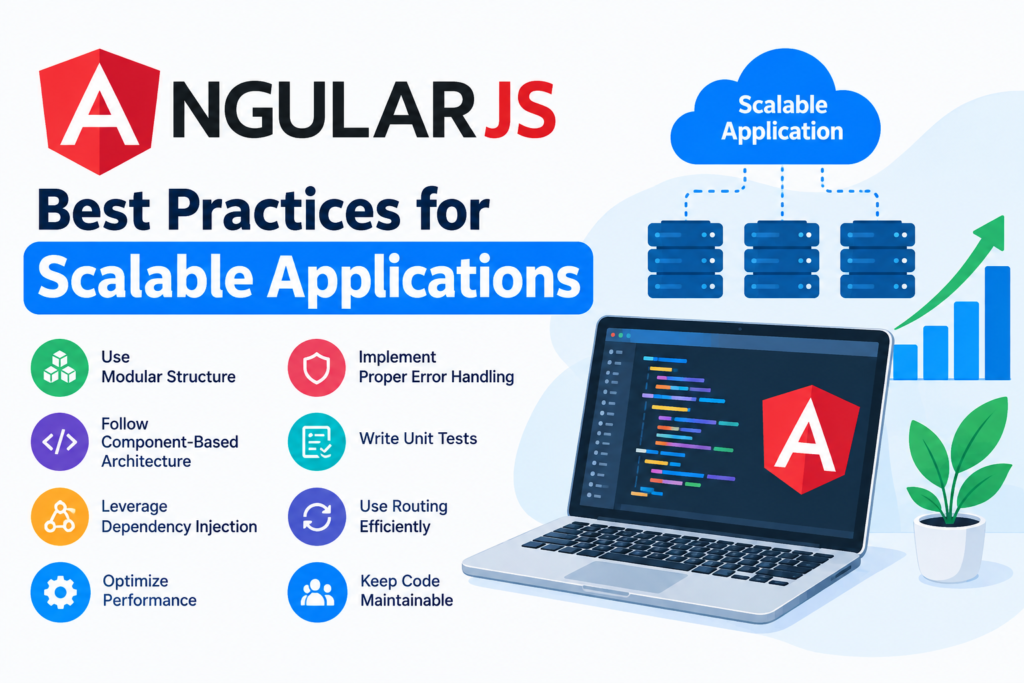
1. Use a modular architecture: Break your application into smaller, reusable modules that can be easily maintained and tested. This will make it easier to scale and add new features in the future. 2. Follow the Single Responsibility Principle: Each component should have a single responsibility and should not be responsible for multiple tasks. This […]
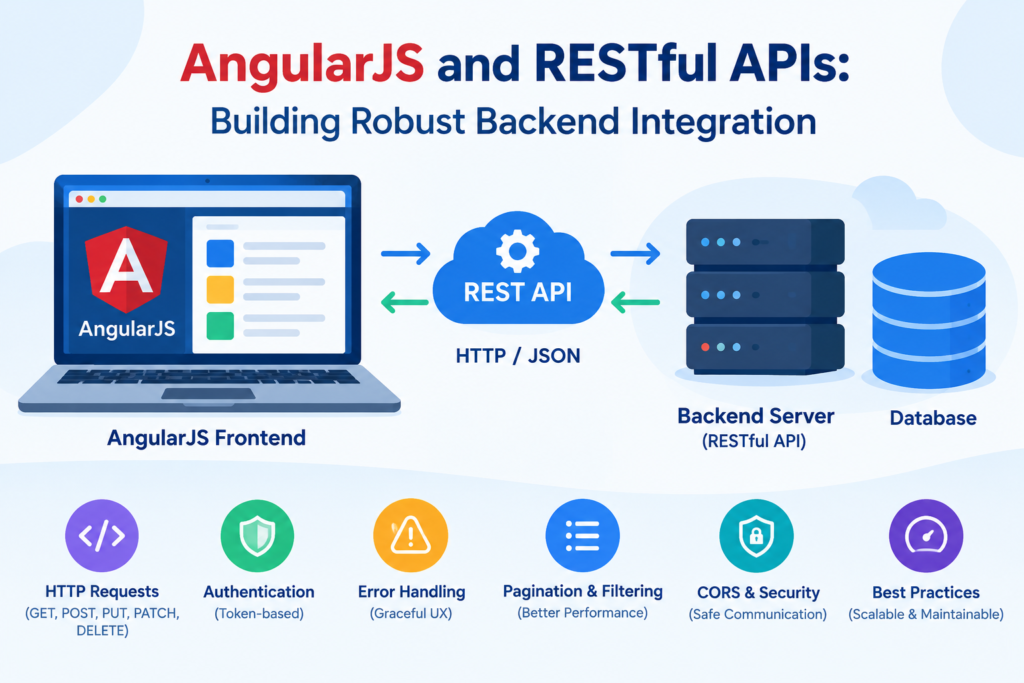
AngularJS is a popular JavaScript framework used for building dynamic web applications. It provides a powerful set of tools and features for creating interactive user interfaces. However, to build a complete web application, you also need a backend server to handle data storage and processing. This is where RESTful APIs come into play. RESTful APIs […]
AngularJS is a powerful JavaScript framework that allows developers to build dynamic and interactive web applications. However, one of the challenges with AngularJS is that it is a single-page application (SPA) framework, which means that the content is loaded dynamically and the URL does not change as the user navigates through the app. This can […]
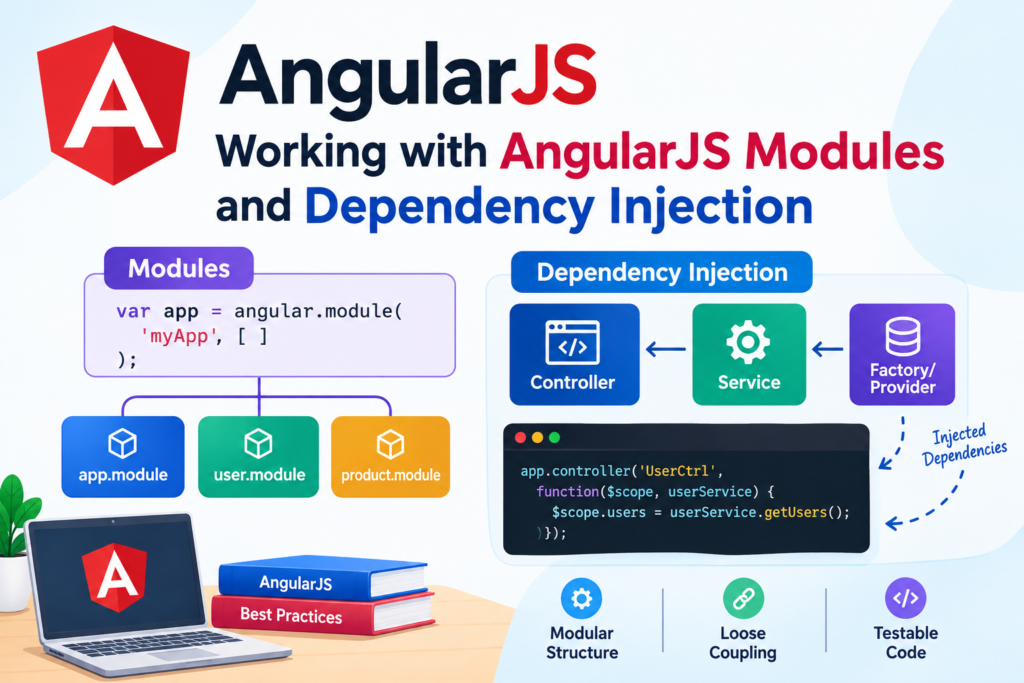
AngularJS modules are containers for different parts of an application, such as controllers, services, directives, filters, etc. They help organize and modularize the codebase, making it easier to manage and maintain. To create a module, you can use the `angular.module` function: <code>javascript var myApp = angular.module(‘myApp’, []); </code> The first argument is the name of […]
AngularJS animations are a powerful tool that can add life and interactivity to your user interface. With animations, you can create smooth transitions, fade in and out elements, and add visual effects to make your UI more engaging and user-friendly. To get started with AngularJS animations, you’ll need to include the ngAnimate module in your […]
To create a custom directive in AngularJS, you need to follow these steps: 1. Define the directive: Use the `directive` method of the AngularJS module to define a new directive. The method takes two parameters: the name of the directive and a factory function that returns the directive definition object. <code>javascript angular.module(‘myApp’, []) .directive(‘myDirective’, function() […]
AngularJS is a popular JavaScript framework used for building web applications. While AngularJS provides many features to enhance the security of your web applications, it is important to understand and implement additional security measures to protect your application from potential vulnerabilities. Here are some key security considerations to keep in mind when using AngularJS: 1. […]
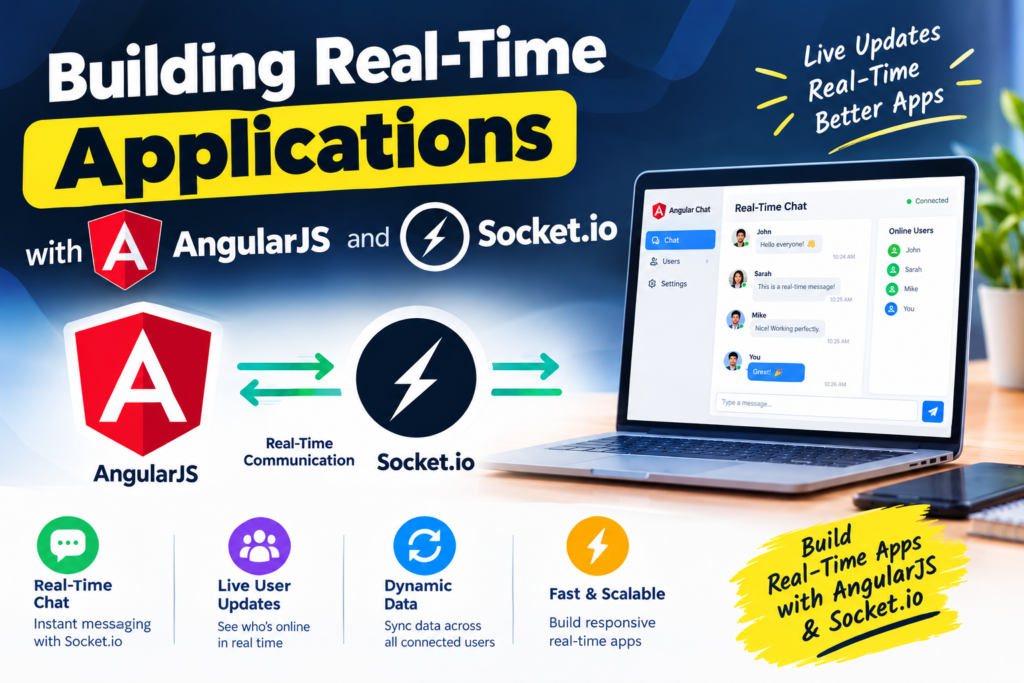
AngularJS is a popular JavaScript framework for building web applications. It provides a structured way to develop dynamic and interactive web pages. Socket.io is a JavaScript library that enables real-time, bidirectional communication between web clients and servers. Combining AngularJS and Socket.io allows developers to build real-time applications that can update data in real-time without the […]
AngularJS provides built-in form validation and error handling features that make it easy to validate user input and display error messages. 1. Form Validation: – AngularJS provides various directives to validate form fields, such as `ng-required`, `ng-minlength`, `ng-maxlength`, `ng-pattern`, etc. – These directives can be added to form fields to specify the validation rules. – […]
Dependency Injection (DI) is a design pattern used in software development to manage the dependencies between different components of an application. In the context of AngularJS, DI is a core feature that allows developers to easily create and manage dependencies between different parts of their application. In AngularJS, DI is achieved by using the built-in […]
When it comes to testing AngularJS applications, there are several best practices and tools that can help ensure the quality and reliability of your code. Here are some of the key practices and tools to consider: 1. Unit Testing: Unit testing is crucial for testing individual components or modules of your AngularJS application. Jasmine is […]
AngularJS provides a powerful animation module that allows developers to easily add animations and transitions to their web applications. This module is called ngAnimate and it is built on top of the standard CSS3 animations and transitions. To get started with AngularJS animations, you need to include the ngAnimate module in your application. You can […]
AngularJS is a popular JavaScript framework used for building web applications. While AngularJS provides many features to enhance the security of your web app, it is important to understand and implement additional security measures to protect your application from potential vulnerabilities. Here are some key security considerations to keep in mind when using AngularJS: 1. […]
AngularJS services are an essential part of building robust and scalable applications. They provide a way to organize and share code across different components of an AngularJS application. In this article, we will provide a comprehensive overview of AngularJS services, including what they are, how to create them, and how to use them in your […]
AngularJS is a popular JavaScript framework that can be used to build dynamic web applications. It provides a powerful way to interact with RESTful APIs and retrieve data from a server. To use AngularJS with RESTful APIs, you can follow these steps: 1. Set up your AngularJS application: Start by including the AngularJS library in […]
AngularJS provides several built-in directives and features for validating user input in forms. Here are some ways to validate user input in AngularJS forms: 1. Using ng-model and ng-required directives: You can use the ng-model directive to bind form inputs to a model variable and the ng-required directive to specify whether a field is required […]
There are several ways to optimize performance in AngularJS applications: 1. Minify and compress your code: Minifying and compressing your code reduces its size, making it load faster. Use tools like UglifyJS or Closure Compiler to minify your JavaScript code, and Gzip or Brotli compression to compress your files. 2. Use lazy loading: Lazy loading […]
AngularJS services are an essential part of building web applications using the AngularJS framework. They provide a way to organize and share code across different components of an application, such as controllers, directives, and filters. Services in AngularJS are singleton objects that are instantiated only once during the lifetime of an application. This means that […]
AngularJS routing is a powerful feature that allows you to create single-page applications (SPAs) by dynamically changing the content of your web page based on the URL. It provides a way to navigate between different views or pages without having to reload the entire page. In this guide, we will cover the basics of AngularJS […]
1. Use one-time binding: One-time binding is a feature in AngularJS that allows you to bind data to the view only once, reducing the number of watchers and improving performance. To use one-time binding, simply add "::" before the expression in the binding. 2. Use ng-cloak: ng-cloak is a directive in AngularJS that hides the […]
AngularJS is a popular JavaScript framework used for building web applications. While it provides many features to enhance the security of your application, it is important to be aware of potential vulnerabilities and take steps to protect your application. Here are some key considerations for securing your AngularJS application: 1. Input Validation: Always validate user […]
AngularJS is a popular JavaScript framework for building single-page applications (SPAs). SPAs are web applications that load a single HTML page and dynamically update the content on that page without requiring a full page reload. Here are the steps to build a single-page application with AngularJS: 1. Set up your development environment: Install Node.js and […]
AngularJS Animations is a powerful feature that allows you to add life and interactivity to your web applications. With animations, you can create smooth transitions, fade in and out effects, and other eye-catching visual effects that enhance the user experience. To get started with AngularJS animations, you need to include the ngAnimate module in your […]
1. Keep controllers small and focused: It is recommended to keep controllers small and focused on a specific task or functionality. This helps in maintaining code readability and reusability. 2. Use controllerAs syntax: Instead of using the $scope object, it is recommended to use the "controllerAs" syntax. This allows you to bind properties and methods […]
AngularJS services are a crucial part of building reusable components in AngularJS applications. Services are singleton objects that can be injected into different parts of an application, allowing for code reuse and separation of concerns. Here are some key points to consider when building reusable components using AngularJS services: 1. Define a service: To create […]
Testing AngularJS applications is crucial to ensure the quality and reliability of the software. Here are some strategies and tools that can be used for testing AngularJS applications: 1. Unit Testing: Unit testing is the process of testing individual components or units of code in isolation. In AngularJS, unit tests can be written using frameworks […]
AngularJS routing is a powerful feature that allows you to build single-page applications (SPAs) by dynamically changing the content of a web page without reloading the entire page. It enables you to create a seamless user experience by providing smooth transitions between different views or pages within your application. To use routing in AngularJS, you […]
1. Use unit tests: Unit tests are essential for testing individual components or functions in isolation. They help identify bugs and ensure that each component works as expected. 2. Use end-to-end (E2E) tests: E2E tests simulate real user interactions and test the application as a whole. They help identify issues with the integration of different […]
AngularJS is a popular JavaScript framework developed by Google for building dynamic web applications. It provides a structured way to organize and manage your code, making it easier to develop and maintain complex applications. In this step-by-step tutorial, we will guide you through the process of setting up a basic AngularJS application and building a […]
1. Follow the Single Responsibility Principle (SRP): Each component or module should have a single responsibility. This makes the code easier to understand, test, and maintain. 2. Use consistent naming conventions: Use descriptive and meaningful names for variables, functions, and components. This improves code readability and makes it easier for other developers to understand your […]
When it comes to choosing the right framework for your web development project, AngularJS and React are two popular options. Both frameworks have their own strengths and weaknesses, so it’s important to consider your project requirements and goals before making a decision. Here are some factors to consider when comparing AngularJS and React: 1. Learning […]
When it comes to choosing the right framework for your project, AngularJS and React are two popular options that developers often consider. Both frameworks have their own strengths and weaknesses, so it’s important to understand the differences between them before making a decision. AngularJS is a full-featured framework developed by Google. It provides a complete […]
AngularJS controllers are JavaScript functions that are responsible for defining the behavior of a particular part of an AngularJS application. They are used to handle user interactions, manipulate data, and update the view. The scope is an object that refers to the application model. It acts as a bridge between the controller and the view, […]
When it comes to choosing the right framework for your web development project, AngularJS and React are two popular options. Both frameworks have their own strengths and weaknesses, so it’s important to consider your project requirements and goals before making a decision. Here are some factors to consider when choosing between AngularJS and React: 1. […]
To create a responsive web design with AngularJS, you can follow these steps: 1. Use a responsive CSS framework: AngularJS does not have built-in responsive design features, so you will need to use a CSS framework like Bootstrap or Foundation to handle the responsive layout. These frameworks provide a grid system and responsive classes that […]
Two-way data binding in AngularJS is a feature that allows the synchronization of data between the model and the view. It means that any changes made to the model will automatically update the view, and any changes made to the view will update the model. In AngularJS, two-way data binding is achieved using the ng-model […]
AngularJS filters are a powerful feature that allows developers to manipulate and format data in their applications. Filters can be used to transform data in various ways, such as formatting dates, sorting arrays, filtering arrays based on specific criteria, and more. In this deep dive, we will explore some of the most commonly used AngularJS […]
Directives are one of the most powerful features in AngularJS. They allow you to extend HTML with custom elements and attributes, and create reusable components that encapsulate behavior and presentation logic. With directives, you can create your own HTML tags and attributes, and define how they should be rendered and behave. This allows you to […]
AngularJS is a JavaScript framework that allows developers to build dynamic web applications. It provides a set of tools and features that make it easy to create interactive and responsive user interfaces. One of the key features of AngularJS is its two-way data binding. This means that any changes made to the data in the […]
1. Use ng-cloak directive to prevent the display of uncompiled AngularJS code on page load. This directive hides the AngularJS code until it is compiled and ready to be displayed. 2. Utilize ng-bind instead of {{}} to bind data to HTML elements. This helps to prevent the display of uncompiled AngularJS code on page load. […]