

Technology & Innovation
AI in Textile Manufacturing: How AI Is Transforming the Industry
Nov
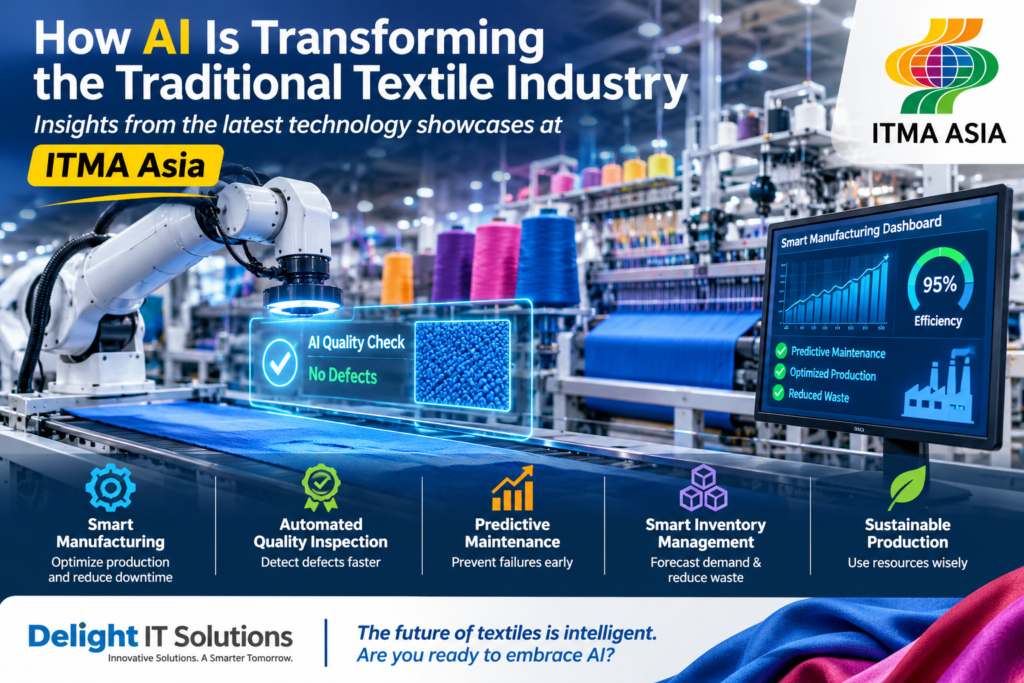
AI in textile manufacturing is transforming traditional factories through intelligent automation, advanced fabric inspection, predictive maintenance, and data-driven production systems. Following the latest technology showcases at ITMA ASIA + CITME 2026, it is clear that artificial intelligence is becoming an important part of the textile industry’s future.
From automated weaving machines to intelligent quality inspection systems, AI is helping textile manufacturers improve productivity, reduce operational costs, and make better business decisions.
The ITMA ASIA + CITME 2026 exhibition in Shanghai, China, taking place from November 20 to 24, 2026, highlights the growing importance of automation, digitalisation, smart manufacturing, and sustainable textile technologies.
But what does this technological transformation mean for traditional textile businesses?
Let’s explore how artificial intelligence is reshaping the textile industry.
1. AI-Powered Fabric Quality Inspection
Fabric quality inspection has traditionally required workers to examine materials manually to identify defects such as holes, stains, uneven patterns, and weaving problems.
AI-powered computer vision systems are changing this process.
Modern inspection systems use cameras, image processing, and machine learning algorithms to identify fabric defects during production.
Some important applications include:
- Identifying holes, stains, and fabric irregularities.
- Detecting inconsistent patterns and weaving defects.
- Generating automated quality inspection reports.
- Reducing defective production.
- Improving consistency across large fabric batches.
AI-powered inspection can help textile manufacturers save time, improve product quality, and reduce dependence on repetitive manual inspection.
2. Smart Textile Manufacturing and Automation
Traditional textile factories are increasingly adopting automated machinery and intelligent production systems.
AI in textile manufacturing allows businesses to analyse production data, monitor machine performance, and optimise manufacturing operations.
Some important applications include:
- Automated production monitoring.
- Intelligent machine control.
- Robotic material handling.
- Production scheduling and optimisation.
- Real-time manufacturing dashboards.
For example, an intelligent production monitoring system can collect information from multiple machines and display performance data through a central dashboard.
Factory managers can use this information to identify production delays, monitor machine efficiency, and make informed operational decisions.
The objective is not simply to replace manual processes but to create more efficient manufacturing environments where machines, software, and workers operate together.
3. Predictive Maintenance: Preventing Machine Failures
Unexpected machine failures can interrupt textile production and increase operating costs.
Predictive maintenance uses machine data, sensors, and analytical models to identify warning signs before equipment breaks down.
For example, an intelligent monitoring system can analyse:
- Machine vibration.
- Operating temperature.
- Motor performance.
- Production speed.
- Historical maintenance records.
By identifying unusual patterns, manufacturers can schedule maintenance before a serious failure occurs.
This approach can reduce unplanned downtime, improve equipment reliability, and support better production planning.
Predictive maintenance is particularly valuable for textile factories that depend on continuous production and expensive industrial machinery.
4. AI for Smarter Inventory and Supply Chain Management
Textile manufacturers must manage different materials, including yarn, dyes, chemicals, fabrics, and finished products.
Poor inventory planning can lead to excess stock, production delays, and unnecessary expenses.
AI-powered inventory and supply chain systems can help businesses:
- Forecast material requirements.
- Analyse historical demand.
- Monitor stock levels.
- Improve warehouse management.
- Coordinate purchasing and production schedules.
- Identify potential supply chain disruptions.
Combining artificial intelligence with ERP and inventory management software can give manufacturers better visibility into their operations.
This allows businesses to make smarter purchasing decisions and manage resources more efficiently.
5. Sustainable Textile Production Through AI
Sustainability is becoming an increasingly important consideration for textile manufacturers.
Production processes involving dyeing, finishing, washing, and material processing can consume significant amounts of water and energy.
AI and intelligent automation can support sustainability initiatives by helping businesses:
- Monitor energy and water consumption.
- Optimise production parameters.
- Reduce material waste.
- Improve resource planning.
- Monitor environmental performance.
For example, data-driven systems can help identify production processes that consume excessive energy or materials.
These technologies do not automatically make a factory sustainable, but they can provide valuable information to support more responsible production decisions.
6. Digital Twins, Intelligent Sensors, and Industrial Robotics
Another important development in AI in textile manufacturing is the integration of connected machines and digital technologies.
Digital twins create virtual representations of physical equipment or production processes. Manufacturers can use these models to monitor performance, evaluate different scenarios, and identify potential improvements.
Intelligent sensors collect operational data, while industrial robots can support repetitive and precision-based tasks.
Important technology developments include:
- Embodied robots for textile applications.
- Intelligent fabric inspection technologies.
- Artificial intelligence development platforms.
- Digital twin production lines.
- Industrial automation and intelligent sensing.
These developments demonstrate how textile manufacturing is moving towards more connected and data-driven operations.
7. How AI in Textile Manufacturing Can Benefit Indian Businesses
India has a significant textile manufacturing ecosystem, with businesses operating in spinning, weaving, knitting, dyeing, garment production, and textile exports.
For Indian manufacturers, AI adoption offers opportunities to improve competitiveness and modernise traditional operations.
However, smaller textile businesses may face challenges such as technology costs, limited technical expertise, integration difficulties, and a lack of digital infrastructure.
A practical approach is to begin with specific operational problems rather than investing in complex technology immediately.
For example, a textile business could start with:
- Digital inventory management.
- Production monitoring dashboards.
- Automated quality inspection.
- Machine maintenance tracking.
- AI-assisted demand forecasting.
Gradual adoption allows businesses to evaluate the benefits before expanding their technology investments.
8. Challenges of Adopting AI in the Textile Industry
Although AI offers significant opportunities, implementing new technologies also comes with challenges.
Traditional textile businesses should consider several factors before investing in AI systems.
Initial Investment: Advanced machinery, sensors, software, and infrastructure can require substantial investment.
Technical Expertise: Businesses may need trained employees who understand AI systems, automation, and industrial software.
Data Availability: AI systems depend on reliable operational data. Poor-quality or incomplete data can affect their performance.
System Integration: Connecting modern software with older manufacturing machinery can be technically challenging.
Employee Training: Workers and managers need appropriate training to use new technologies effectively.
Starting with smaller projects and gradually expanding technology adoption can help businesses manage these challenges.
9. How Technology Companies Can Support Textile Businesses
The transformation of textile manufacturing requires more than advanced machinery. It also requires software, data management, integration, and digital infrastructure.
Technology companies can help traditional businesses modernise through:
- Custom software development.
- AI-powered business applications.
- ERP and inventory management integration.
- Production monitoring dashboards.
- Workflow automation.
- Business reporting and analytics.
- Website and eCommerce development.
For example, a textile manufacturer could use custom software to monitor orders, track inventory, manage production schedules, and generate operational reports.
These digital solutions can complement existing manufacturing technologies and help businesses build a stronger digital foundation.
At Delight IT Solutions, we believe intelligent technology can help businesses across traditional industries improve their digital capabilities.
Our services include website development, WordPress solutions, custom software development, and AI-powered applications.
Explore Delight IT Solutions to learn more about our digital and technology services.
Conclusion: The Future of Textile Manufacturing Is Intelligent
AI in textile manufacturing is no longer just a technology trend associated with software companies. It is becoming an important part of traditional manufacturing.
From fabric inspection and predictive maintenance to inventory forecasting and sustainable production, artificial intelligence offers textile businesses new ways to improve efficiency and manage resources.
The technology developments showcased at ITMA ASIA + CITME 2026 demonstrate the direction in which the industry is moving.
For textile manufacturers, the question is no longer whether digital transformation matters. It is how to adopt the right technologies at the right time.
The future of textile manufacturing will combine human expertise, intelligent machines, automation, and data-driven decisions.
The textile industry is entering a smarter era, and AI will play an important role in shaping its future.
