
World News
$1.3 Billion Gone: US Lost 45 Reaper Drones in Iran Conflict, Says Report
Aug
$1.3 Billion Gone: US Lost 45 Reaper Drones in Iran Conflict, Says Report
The United States has reportedly lost at least 45 MQ-9 Reaper drones during its more than five-month conflict with Iran, marking a significant setback for America’s unmanned surveillance and strike capabilities.
According to a report citing U.S. officials, the losses represent roughly 25% of the U.S. military’s Reaper fleet and could amount to more than $1.3 billion in hardware losses.
45 Reapers Lost During the Conflict
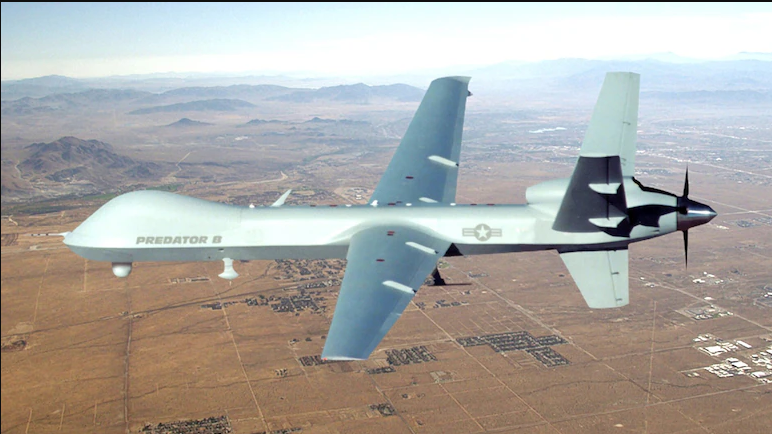
The MQ-9 Reaper is one of the U.S. military’s most widely known armed unmanned aircraft. It is designed primarily for persistent surveillance, intelligence gathering and precision strikes.
Reports indicate that the U.S. had approximately 185 Reapers in its military inventory before the conflict, including aircraft operated by the Air Force and Marine Corps. Losing 45 aircraft would therefore represent about one-quarter of that fleet.
The reported losses are particularly significant because Reapers are intended to provide long-duration surveillance over large areas.
Not Every Drone Was Shot Down
While the headline figure of 45 lost drones has attracted considerable attention, the losses should not be interpreted as 45 aircraft being destroyed by Iranian air defenses.
U.S. officials reportedly indicated that not all of the Reapers were shot down. Some were lost following communication-link failures or other operational problems.
This distinction is important because modern military drones depend heavily on communications networks and satellite links. Disruption of those systems can potentially result in the loss of an aircraft even without a conventional missile or gun attack.
Why Does the $1.3 Billion Figure Matter?
The estimated value of the lost Reapers exceeds $1.3 billion. Individual MQ-9 aircraft can cost tens of millions of dollars depending on their sensors, communications equipment and weapons configuration. Reports put the approximate cost at $30 million to $50 million per aircraft.
However, the financial impact goes beyond the purchase price of the aircraft.
Replacing lost drones can also require additional spending on:
- Sensors and surveillance equipment
- Communications systems
- Ground-control infrastructure
- Training and personnel
- Weapons and mission equipment
- Maintenance and logistical support
As a result, the long-term cost of rebuilding the fleet could be substantially higher than the value of the aircraft themselves.
Strait of Hormuz Becomes a Key Operating Area
The Reapers have reportedly been heavily used around the Strait of Hormuz, one of the world’s most strategically important shipping routes.
The waterway has become a major flashpoint during the Iran conflict, increasing the importance of persistent surveillance and intelligence gathering.
For the U.S. military, maintaining continuous aerial surveillance in such an environment is important for monitoring military activity, shipping movements and potential threats.
Why Reapers Can Be Vulnerable
Despite their sophisticated sensors and long endurance, MQ-9 Reapers are relatively slow compared with fighter aircraft and operate at comparatively low altitudes.
That can make them vulnerable in areas where an adversary possesses capable air-defense systems or electronic-warfare capabilities.
The reported losses therefore raise questions about how traditionally large unmanned aircraft will be used in heavily defended airspace.
US Military Faces a Replenishment Challenge
The reported losses have also raised concerns inside the U.S. military about how quickly the Reaper fleet can be replenished.
An Air Force official previously told senators that the active Reaper inventory had fallen significantly and that the service was examining ways to replace aircraft more rapidly.
Replacing dozens of aircraft is not simply a matter of purchasing new airframes. Manufacturing capacity, specialized components, sensors and other systems can all affect how quickly new drones become operational.
What the Losses Could Mean for Future Warfare
The reported Reaper losses could provide an important lesson for future military operations.
For years, large armed drones have been valued for their ability to remain airborne for long periods while conducting surveillance and precision strikes. But conflicts involving sophisticated air defenses and electronic warfare are demonstrating the risks faced by large, relatively slow unmanned aircraft.
Military planners may increasingly look toward a combination of:
- Smaller and cheaper drones
- Autonomous unmanned systems
- Electronic-warfare-resistant communications
- Swarms of expendable drones
- Advanced stealth platforms
- Satellites and other long-range surveillance systems
The objective would be to reduce the cost and strategic impact of losing individual unmanned aircraft.
A Major Warning for the U.S. Drone Fleet
The reported loss of 45 MQ-9 Reapers represents more than a large financial bill. It also highlights the challenges of maintaining persistent drone operations in a contested environment.
If the reported figures are accurate, losing approximately a quarter of the military’s Reaper fleet during the conflict could force the U.S. to reconsider how it deploys large surveillance and strike drones in areas protected by sophisticated air defenses.
For now, the $1.3 billion figure is the most striking part of the story, but the broader issue may be even more important: the changing battlefield is forcing militaries to rethink the balance between expensive, highly capable drones and larger numbers of cheaper, more survivable unmanned systems.
